Friday, November 26, 2010

Huayk'ampara, a Visit and the Chapare

I haven't been able to access my blog for a while now because the internet has been crummy. But just recently, I've found that using the phone in my new kitchen, I can get a pretty good connection. So I guess my last entry was during my visit stateside.
I arrived back in Bolivia, September 2nd. And sitting in the La Paz bus terminal, listening to the people calling "Cochabamba, Cochabamba, ya sale!" I thought, 'I need to go to Rurrenabaque.'
So I repacked my luggage a little, left my big suitcase at the bus terminal and went down to Villa Fatima, where the buses to the Amazon leave from (you're not supposed to end a sentence with a preposition, are you?). So I arrived in Rurrenabaque and immediately ran into an old friend that invited me to spend a week on a cattle ranch, translating and riding horseback. I said, "Oui! Qué super, c'est une chose plus bon que je'est puveir imaginée!" My friend is French. I surprised him when I entered his office and greeted him in French. When we knew each other, I had dread locks and didn't know French. It was funny, and I was pretty proud of myself. The idea of the tour company and the ranch is that it's not classic tourism, the ranch is a working ranch and the guides are the ranch hands and the food is the same as they eat there, and the days are organized according to the work that needs doing on the ranch. We got to brand cattle and castrate bulls.
So I spent a week on horseback and got paid for it. Good birthday present.
When I arrived back in Cochabamba, I dove right into organizing a cultural fair of indigenous food, dance and textiles in a neighboring community, Huayk'ampara. It was called "Primera Feria de la Ñawpa Mikhuna, Huak'amapara, Tapacarí." Ñawpa is Quechua for 'ancestral' and Mikhuna is food. The pictures tell most everything that needs to be said. The night meetings were the most tiring part. We'd meet starting at 8pm when everyone came in from their lands and stayed talking and organizing until 11 or 12. Long days. Then it was really hilarious to go into the city with the community leaders asking for support and donations. We even got to go on TV! The Friday night before the event, also the first Friday of the month, the day of the K'oa we had a combined K'oa/Ch'alla, giving thanks to and asking the blessing of the Pachamama for the event. The fair was way better than we could have expected. The music and dance groups were spectacular, so much energy, and the local groups were incredibly authentic. It was truly a demonstration that the ancient cultures here are still alive and well, although below the surface.
After the cultural fair, I got a modeling job in the Chapare, the southern tropical region of Bolivia near Cochabamba, also where they grow a lot of coca and have a lot of cocaine production problems. So we found a beach looking river bed and a tropical resort and took some pictures. Pretty fun, but the clothing company sent us without any representatives and weren't happy with the results. So I haven't been paid yet, and we haven't officially finished the campaign. Pretty lame, Almanza.
Then my mom came to visit with some good folks from the Presbyterian Church at New Providence, NJ. We spent a ton of time at Villa Amistad, painting the house, but mostly playing with the kids, making puppets, establishing relationships that have continued through email and packages and word of mouth. It was a good thing. Especially for the kids. They just lit-up, after the first day or two. We also visited Huayk'ampara on All Saints Day and everyone got to try chicha. Hehehe. Especially our pastor, Jeff.
After that, I was doing a lot of Visa stuff. I got turned away four times. Had to start over from scratch once, went to La Paz to get more pages putin my passport at the US Embassy. I was kind of wanting a smile and a warm hug, but instead I was treated like a potential terrorist and made to wait behind thick nuclear war proof windows and talk through speakers. Pretty disappointing. And I had to pay an arm and a leg. Thanks for the hospitality, homeland.
Recently, I've been twice more to the Chapare, once to be in a Taquiña beer commercial and then hang out at some friends' cabin and again for a team building retreat with my coworkers from Aramasí. We went out to the land of one of the nurses at the clinic. Then we hiked through the jungle looking for a river to fish in. We must have walked 15 miles that day. I was pretty happy to be back in the jungle with a machete in my hand. Ok, I've gotta go work at Casablanca. I'll put more pics from the cultural fair up soon. They're awesome.

Thursday, June 24, 2010

Vacation and what's ahead

24 June
These pics are from Sam's Throne Arkansas, yesterday. Julian Carrier, my childhood neighbor from Kirkwood, MO is featured. We used to play together EVERY DAY, but we haven't seen each other in 20 years! Turns out we've got some things in common...
I feel like this blog is supposed to be about Aramasí, but I'm not there right now and don't really have anything to write about it.
But I can say this; I have been talking constantly about what I've been 'doing' in Bolivia and explaining in simple terms what my purpose is, and it's helped crystallize my vision. I have come to terms with the necessity of my time in Aramasí and Cochabamba without accomplishing anything measurable. There were some personal issues I had to work through, for one, but also, I had to establish myself as a normal guy, an average human that people can understand and relate to and laugh at with no ulterior motives. So now that I'm known as I am, I can start working, as me, not an agent for Amistad or the USA or anything else. Just Diego doing what he came to do for the community. Anyway, that's what I am hoping.
So the next part is going to be a lot of work. I will stop by the home of Father William, the founder of Amistad, to have a chat about it's inception and vision and purpose and reflections on how that went, is going, could have been better. I will research and write a brief history of the organization's 26 years of work. I also will survey and interview the folks in Aramasí and the surrounding communities affected by Amistad (as well as a 'normal' community not affected by Amistad) interview the staff in Aramasí and the administration, write an evaluation, and finally a projection of the time and steps it will take for Aramasí to achieve sustainable independence from Amistad. Whooph. That's what I've got on my mind. And being here helps me gain a broader view of the process and work before me. It's all set-up, now it's just gotta get done.

So, I have been on the road for four days straight, driving south and west from Summit, NJ. It took two full days before I was really in the zone. My rout took me to Washington D.C., Greenville SC, Nashville and Memphis TN, and finally, Lampe MO. I stayed with friends and friends of friends my three nights on the road. When I got to our lake house in Lampe, I met up with my childhood neighbor who had come down from St. Louis. The next day, we went out to Sam's Throne, my favorite climbing spot. These pictures are from Sam's. We had a good time, topped our a few routs, took unnecessary risks, and ate tons of wild blueberries.
I start work at summer camp tomorrow. I'm a little nervous, but I'm sure I'll get into the swing of things in no time; Summer camp style.

Friday, June 11, 2010

Just Pictures


Well, it's 7:30 and about time to start closing up at my little cafe corner in the YMCA of Summit NJ. But I might as well take advantage of the internet and upload some pics.
Holy moly, that took about 15 seconds, and in Bolivia it takes at least 5 minutes.
This is my surrogate family on calle Ayacucho, dowtown Cochabamba. Antonio is the adorable old man, Orjito the cute little kid and the dog's name is Toby. They are the ones that shamelessly barge into my apartment, look in the windows, call on me through the walls and generally violate my privacy. But I don't mind, it makes me feel more at home.

Below is my Aramasí family in front of our communal home, the Amistad Health Clinic. Only José is missing, I think he was last minute watering.


Above is a prime example of the quality craftsmanship of the altiplano. These are the adobe bricks that are used in every construction out here. Keeps you cool in the heat and warm in the cold.
A happy beneficiary of Amistad's health service in the community of Huayujo. The one in the goofy hat to the left is the head nurse, Freddy.


José is practicing the ch'alla before partaking in some delicious, homemade chicha. The ch'alla is when you spill some of your drink on the ground for the pachamama before you have any. You can see some of the chicha spilling out of the top of the tutuma in José's hand. Lucky shot on my part. The other gents are community leaders Don Dionisio and Don Felix. This was our welcome on arriving from Bombeo by foot. Not bad.
Community meeting on the topic of irrigation and dam water management.


This was on our way down from Bombeo. The reservoir behind the dam was quite a sight after a few hours of sunbleached hills. Bombeo, by the way is the word for pump. The place, Bombeo is called such because it is way high up and an important pipe and road intersection so the traffic and gas and oil all get "pumped" through the spot. It's also the place we hitchhike to before legging it down to Aramasí if there's no ride.


Yes, I did. I had to.
José didn't know how I stayed afloat without being able to touch the bottom. I told him I would swim. And then he asked the same question again. I think we have a misunderstanding about what swimming is. He thought I was going to drown. Ha.


This is what we do for fun in Cocha. This was once a garage, now it's a hang-out for climbers. Free to all, known to few.


Self-portrait outside of Ahuri. I already look forward to being back out there.

The next few blogs will take place in the USA. Maybe not so boring, though.

Tuesday, April 27, 2010

The Great Anual Textile Fair

Since I'm dedicated to unrestrained honesty these days, I must first say that I've now spent two whole weeks in Cochabamba, working at Casablanca (a hip Italian café I've worked in since 2005) trying to make some cash on tips. The salary is 5 bolivianos (80 cents) an hour. And I'm doing it for the money. Pretty awesome. 8 hour shifts from 6pm- 2am. I'm also flat broke, and I'm newly single.
But this Sunday was the big textile fair in Aramasí, so I had to go. I went with Casa Esperanza in the bus from Villa Amistad. Also, one of my oldest friends from Cocha, Katya joined us and is responsible for many of the photos. Casa Esperanza is the house I visit most in the Villa. That's because mama Jenny's the best, it's Roxana's (my goddaughter) house of origin and all the little dudes there love to rough house and have daredevil contests. Since they were toddlers, Freddy and Mario and Douglas have been climbing up and jumping off furniture, walls, trees, anything accessible. On my last visit to their house, they got me to jump off the roof. We always have a great time and I get to be a kid, and they do too. That's to say, it wasn't any ordinary trip to Aramasí.
We arrived in Aramasí at 11 am, after two hours of the typical, "Are we almost there? How much longer till we're there? Are we about there?" In Cochabambino that's "¿Ya llegamos? ¿Cuánto falta para llegar? ¿Casi estamos ya?"
There wasn't much going on when we got there, set-up, people milling around, none of the fun Aramaseñans that I usually hang out with. The folks in Aramasí tend not to come out when there are people from other communities around. I guess they're more comfortable waiting in their houses, not feeling the need to be hospitable or mingle or anything until the festivities actually start. I don't know, it felt a little strange.
So, with some time to kill, I wanted to go out to the dam, I climbed through the tunnel at the bottom last time I visited and I think they closed the gate since then. So I went off down the hill with Douglas, the activities director from the Villa and Carla, his faithful sidekick. We found most of the kids from Casa Esperanza down at the water where we have to cross the stream before starting the climb up to the dam. After playing in the creek, most of the kids decided they wanted to go up to the dam. Because they didn't realize how far it was. Hehehehe.
When we got to the dam, it was so worth it. The rainy season is over, so mud doesn't get washed off the hillsides into the waterways and the water in the reservoir was crystal blue-green. It looked so good, I had to jump in. The kids thought I was crazy, they had no idea how I could stay afloat without being able to touch the bottom. I was the only one who jumped in. But the rest of them went down to the shore behind the dam and practiced skipping rocks.
Then we walked back down to the textile fair. We had already missed some of the festivities, and when we got there, some guy was talking in Quechua, it sounded like a political rally and there was a wicked wind. The kids went to eat there lunch on the bus and I had some Chivo al horno (baked goat) which was delicious. I ate too quick to get a picture of the food. There were no utensils, and so salad, two varieties of potato and leg of goat was gobble down with the hands. It was awesome. During the feast I shared some chicha with Freddy, the head nurse, and some medical profession visitors. We all got up and complemented the food and pretended like we were leaving without paying. Doña Cristina, the cook, chased after us yelling in Quechua and smiling. I don't know what exactly was said, but it made everyone laugh really hard.
Ah, good times.
Different music groups were playing after lunch and it was difficult to round everyone up for our scheduled time of departure. Then seven or eight other visitors from town asked to join us back to Cocha. Then the bus didn't start. So I sat in the driver's seat, pushing pedals and trying to start the engine when they gave me the sign. They took the battery out, put it back in, bought some wires, poured some Coca-cola in there, got some other men to check it out. And finally, the bus started and we left. Most everyone fell asleep immediately. But then the little guys woke everyone up and started playing punching games and the girls started singing Spanish versions of that song-chant they do in Big with Tom Hanks, you know? Anyway, I became a human carnival ride pretty quick. My arms are still sore. The next morning was a meeting in the Villa and I did not come close to making it.
Well, I'll be lucky to publish this now. The pics just aren't loading.

Saturday, April 10, 2010

Progress, I think

Well, where do I start? I started by loading pictures, and I didn't choose what side to load them on very well. So please excuse the disorder.

Life has been intense and interesting lately. More has been going on in my personal life than in my 'professional' life. Some of the hi-lights are that I found some climbing buddies, I rode a mule, an old friend visited me from Honduras, I climbed through the dam, I was in 3 newspapers, and I got a promotion at work (waiter to manager!).


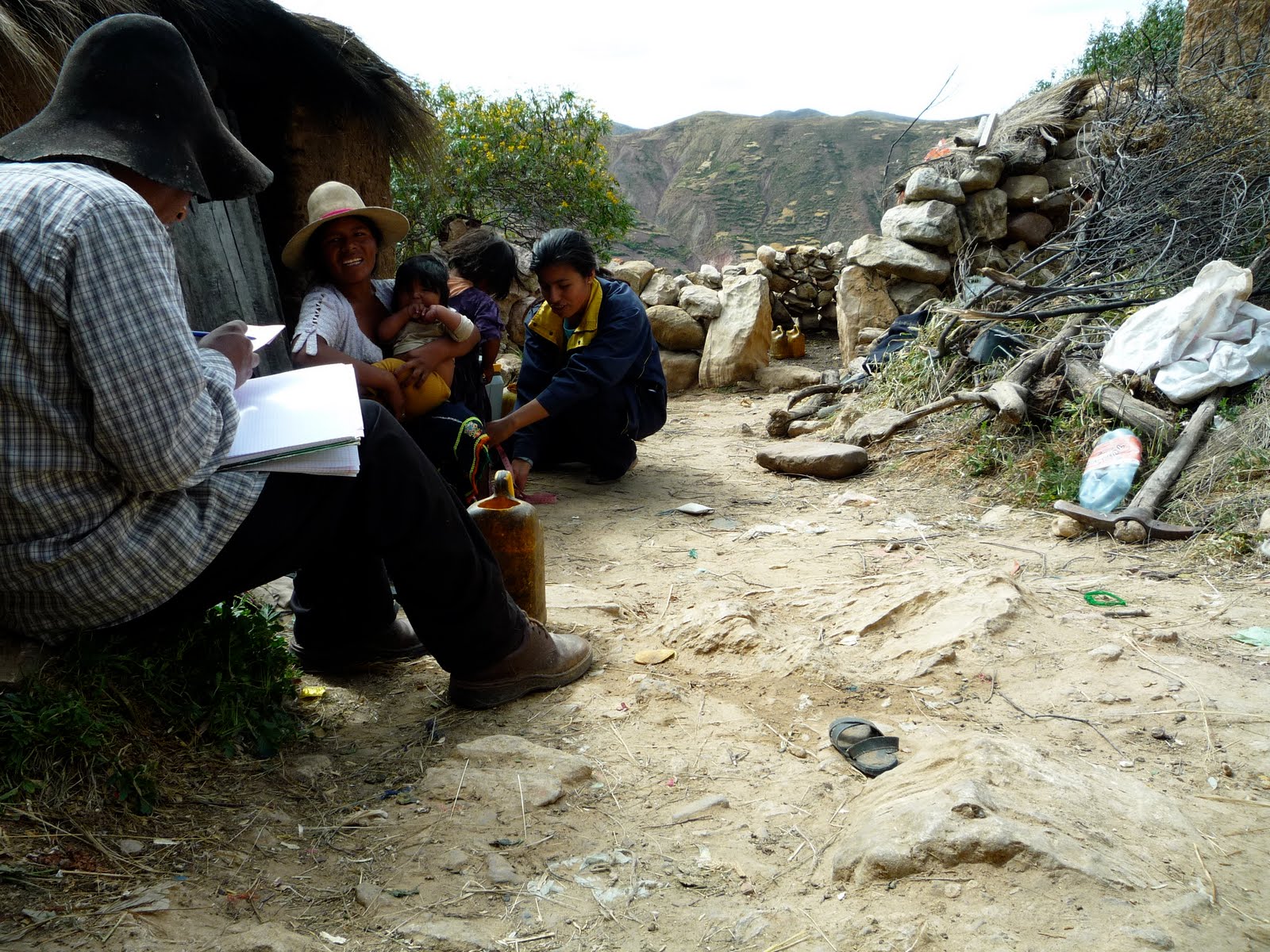
We've been working mostly in two communities, Chupak'asa and Ahuri. Ahuri is my favorite community, and I'm the only gringo ever to visit. Maybe I've mentioned that before. But it's still true, and I'm pretty proud. Ahuri is the furthest community we do agricultural work in. There are some communities that receive health services from us that are much more remote. But Ahuri is prettier. It is bubbling with water, it literally oozes out of the ground everywhere, the whole place is soggy. It's on a green hillside striped with high stone terraces. Obviously, Ahuri does not lack irrigation or potable drinking water, but they do lack sustainable agricultural methods. About two months ago, we drug a plastic drum, some tubes, 5 kilos of sulfer and calcium powder, chancaka (a huge brick of caramelized sugar), and a plastic valve to the community. Just this week, though were we able to put the stuff to use. I wrote about our mountain ridge meeting last week or so, and the time before that was carnaval and we were distracted by chicha, food and abundantly producing family gardens. So we finally made the organic fertilizer and pesticide. The ingredients for the fertilizer, or 'fermented shit,' (as José affectionately calls it) are bullshit (7 kilos), a liter of milk, half kilo of ash, one kilo of chankaca and a liter of water. All of that gets dissolved and mushed-up and goes into the drum. Then we punched a hole in the lid of the drum and fixed a valve in it and connected a tube to the valve. So the only air coming in or out of the drum is through the tube. Then the tube goes into a bottle of water so air can blow out, but only water can get sucked in. And then we put the contraption in the sun because fermentation happens quicker at higher temperatures. We did all this really slow, step by step, explaining (in Quechua) what to do in what order and why. All the time, the farmers were given the tasks to complete, José just explained how and why. The guys were pretty capable of doing everything and understanding the process. And I think they were pretty excited about the new toy and new opportunities to improve their production.
Next, we made organic pesticide, or as José calls it, Sopa Sulfer-cálsico (sulfur-calcium soup). First we made an adobe brick fire pit and lit a fire. Then we put a 30 liter tub on it full of water. Then we measured out 1 kilo of sulfur and 1 kilo of calcium powder. When the water was boiling, we threw the powder in and began to stir. We stirred for an hour and a half, at least. The soup went from bright yellow to orange, to brownish orange, to dark port wine color. Stirring was really a pain because it kept boiling over and splashing everywhere. And because you didn't want to stand too close to the fire or bubbling stew. And the sun was hot and bright at over 3,000 meters above sea level. But sitting around, taking turns stirring sulfur soup is a great opportunity for chit chat. I got invited to a party tomorrow, supposedly celebrating Quasimoto. But I think they were joking. Not about the invitation, about the theme. By the time the soup was done, we were ready to climb back up to the truck. But before we left, we were given heaping bowls of rice and potatoes with a few veggies around the edges. I barely managed to get it all in my mouth. But it was good starch energy for our hike.

In Chupak'asa we've been working on installing an irrigation system. I got the job of carrying the roles of tubing down to the community. There is a stone water reserve under a natural spring that we were able to use as the water source. We had to empty it to clean it out. That's what I'm doing, cleaning out the rocks. But you can see the water trinkling out of the pipe there, which comes from the spring, protected by that cement construction. Silvia, there, is one of the cute girls from the community that goes to school in Aramasí, and an excellent soccer goaly. We connected a tube system with control valves to bring water to all the family gardens. And at Silvia's house, since they have the best garden, we installed a sprinkler. So here we are, the whole irrigation team standing over the first dry season sprinkler in Chupak'asa. When we turned it on, it had so much pressure that we all had to run away so not to get soaked. Then we adjusted it to water the garden and not the whole household. After the sprinkler was fixed, we had a little feast in their inner court area. We feasted Papawayku (potatoes cooked under ground), llajwa (freshly crushed spicy sauce with locoto and quilquiña from the garden), choclo (large kernal corn) and sardines with raw veggies. My job was to open the cans of sardines with my knife. And everyone always asks what I carry a knife around for.

Another thing that happened which was very important for my project was a community wide meeting. They are held every month on the 25th. But this meeting was more important for three reasons: the executive director of the Association Amistad Bolivia was leaving and a new one taking her place, so they were both there to symbolically pass the torch, the president of Amistad and director of the American board had also come from the US to be at the meeting, and also, it was the meeting before elections and they had to talk politics to their community vote would count. So everyone was there, even people that don't live their, but still claim it as their 'home.'
During the meeting I was watching closely for my chance to jump in and present my project officially to the community in front of it's leaders and the directors of Amistad. So I jumped in, José translated for me into Quechua and then the mayor of Aramasí STOOD UP and supported me and my project to the community, saying that it was good and important to the community that they cooperate and support me!!!! I got the official blessing. THAT'S just what I had hoped for. So now I just have to do it.

Wednesday, March 24, 2010

Stalling work and the Ch'alla


Something has changed with blogger.com. I can't--Nope, just the internet being slow. It's a slow day, today. For the last two weeks, the weather has been like summer in Utah, hot and dry. But yesterday evening a wind picked-up and today it's been cool, damp and dark gray. When you're used to BRIGHT hot sun at first light and blue blue sky, the lazy glow and cool of cloud cover makes you feel that the day hasn't started and nothing can be asked of you. I like that feeling, no pressure, no rush, makes it easier to get out of bed.

This pic is a meeting above a community called Ahuri, which is my favorite community. Typically, we were scheduled to go out there to work on organic fertilizers, but the men were called to duty repairing the road because there were rumors of a tractor coming through. So we met them half way between their road work and the community, on a high ridge. The meeting was in Quechua, but what I could piece together was that the community was wanting to break away and do stuff on their own, and José was explaining the importance of working with an organization like Amistad instead of trying to do it their way with Government aid. He was saying that Amistad was quick to respond to needs and requests and very generous and reasonable. Also they would have better access to resources and no conditions.

I was expecting to go into Aramasí early this morning, but I never got a call and José's phone is out of service. Tomorrow's the big meeting with all the directors from Bolivia, city-side and country, and the US. So I've been trying to get my documents in order and my strategic plan worked-out. That's been my priority. But today we have to clean-up and pull-up the weeds so Aramasí looks her best for the visitors.

I remember promising to tell about the Ch'alla in my last cursory entry.
The pictures would do a better job, but since Blogger can't even manage to save text changes, uploading photos is out of the question.

A ch'alla is a ritual dedication of something new, in this case, the dam, to the Pachamama (Mother Nature or Mother Earth). Ch'alla is a verb and a noun, by the way. People ch'alla their new cars, stereos, houses for sure, business for sure, we even ch'allaed José's new driver's license so that all would go well and we wouldn't get stopped or bothered by the police at the checkpoints. The idea is that if you deidcate something to the well-being and purposes of the Pachamama, the Pachamama will make sure all goes well for you and your things, you won't crash or get your new car stolen, your house will be protected from disaster and robbery, and your dam will provide plenty of irrigation water without getting filled-in with silt or stopped-up with debris. The Pachamama can and does have control over all of these things.

So, what does one do to ch'alla? The most direct answer is celebrate. Every ch'alla is a celebration, and drinking must be involved. Celebrate connotes splurging and excess, there must be plenty of food, drink, people, coca, decorations, merry-making and speeches. You drink and also spray or pour out the alcohol on whatever is being ch'allaed. So we shook and sprayed beer all over the dam before partaking ourselves. Kind of like breaking a bottle of Champagne on a ship's first voyage. For the dam, a lamb was slaughtered and it's blood spilled on the dam. Then the lamb was cooked in a stew, the whole thing minus the skin, and we ate it for lunch. It was pretty gamy (is there an 'e' in that word?). The dam was also decorated with streamers and flowers and colorful things that blow nicely in the wind. All of the important people involved in the dam were invited to stand in front of everyone and make speeches about the importance of the dam and the community and stuff like that. And then the community leaders went around to everyone wrapping ribbons around our necks and annointing our heads with confetti. All the while, there are at least two guys walking around with buckets of chicha and a tutuma, making everyone drink the traditional, home-made corn-liquor. Chicha is almost always served out of a colorful plastic bucket exactly like our sand buckets for the beach, and served with a half-shell of a round gourde (tutuma). Everyone drinks from the same tutuma, which is repeatedly dipped into the bucket with the hand of the server. Allegedly, or maybe traditionally, chicha is made with spit to help it ferment.
I don't know why, but there was no music at the dam ch'alla, which disappointed me a little. But there were fireworks.
José called and said I should stay and get my Strategic Plan and Questionnaires finished. So that's what I'll do.

Sorry the other picture won't load. Bummer.